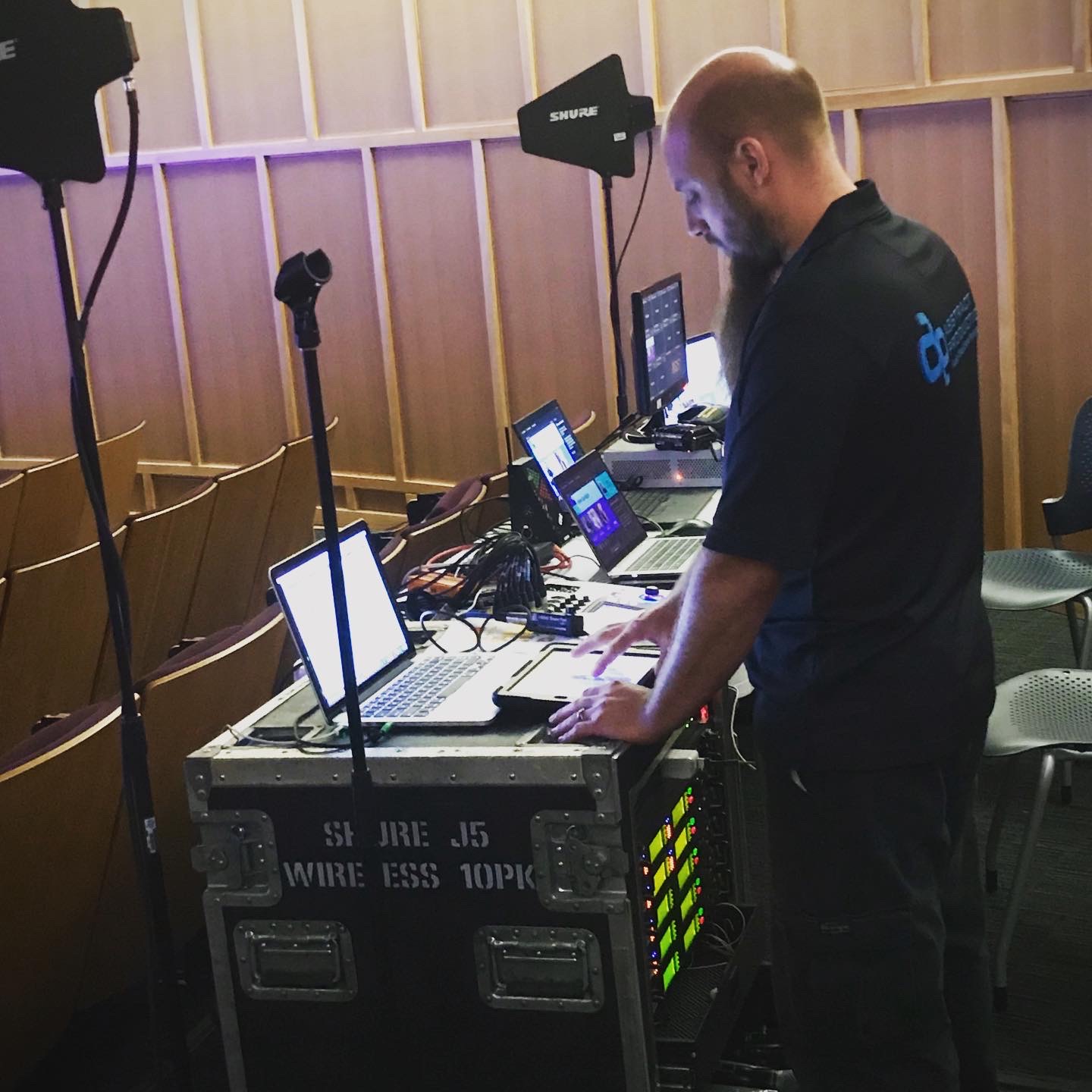
Audio engineer working at a rack of wireless microphone receivers

Guide

Building a microphone plan for panels and Q&A

Panels sound bad by default. This guide covers the channel plan, gain structure and runner choreography that fix it — plus a printable checklist and wireless microphone rental pricing.

Start here

Building a Microphone Plan for Panels and Q&A

Panels sound bad by default. A deliberate mic plan, gain structure and runner choreography fix it.

Panels are the most common audio failure at conferences: too many open mics, inconsistent levels, and a moderator competing with the room.

Start with one mic per panelist on stands or gooseneck bases rather than shared mics. Automatic mixing keeps only the active mics open, which raises gain-before-feedback across the whole system.

Set gain per speaker during a real sound check with the panelists in their chairs, not with a technician talking into each mic from three inches away.

For Q&A, two runners with handhelds beat a stationary aisle mic every time. Brief them on where to stand and how to hold the mic for the audience member.

Record an isolated board mix. If the session becomes content later, you will be glad you did.

Related: professional sound system rental, what is a professional sound system and the original blog post.

Checklist

The microphone plan checklist

Work top to bottom on load-in day. Everything here is what our A1 and A2 confirm before doors open.

Channel count

  • One microphone per panelist — never a shared mic
  • Moderator on a separate channel with its own level
  • Two roving handhelds for audience Q&A
  • Podium gooseneck for the welcome and closing
  • Two spare channels charged and coordinated

Coordination & power

  • RF scan of the venue on load-in day
  • Frequencies coordinated across every transmitter and comms pack
  • Fresh batteries in every pack, spares at the A2 position
  • Antenna distribution with line of sight to the stage

Sound check

  • Gain set with each panelist seated and speaking normally
  • Automatic mixing enabled to hold gain-before-feedback
  • Ring out the room with the house lighting at show levels
  • Confidence monitor or side-fill checked from every seat on stage

Show & capture

  • A2 stationed offstage for swaps and battery changes
  • Runners briefed on where to stand and how to hold the mic
  • Isolated board mix recorded for later content use
  • Mute plan for open mics during video roll-ins
Download the full audio equipment checklist (PDF)

Pricing

Wireless microphone rental packages

Starting points for Gulf South events. Every quote is itemized across gear, delivery and labor.

Panel starter

from $450

Up to four panelists plus a moderator in a meeting room.

  • Five wireless channels (handheld or lavalier)
  • Compact PA with mixer and automatic mixing
  • RF coordination and delivery
  • Technician for setup, sound check and strike

Conference panel + Q&A

from $1,150

Panels with roving audience microphones and recording.

  • Eight to ten coordinated wireless channels
  • Digital console with automatic mixing and recording
  • Two roving handhelds with briefed runners
  • A1 at front of house plus an A2 offstage

Multi-room conference

custom quote

Breakouts and a general session sharing one RF plan.

  • Venue-wide frequency coordination across rooms
  • Matching mic kits in every breakout
  • Comms for stage managers and runners
  • Isolated recordings per room for post-event content

FAQ

Microphone plan questions

Plan one microphone per panelist plus a separate channel for the moderator, two roving handhelds for audience Q&A and a podium mic if there is a welcome. Add two spare channels — a six-person panel is realistically a ten-channel plan.

Lavaliers give consistent level regardless of how a panelist turns their head, which is why we default to them for recorded or streamed sessions. Gooseneck or tabletop mics work well for seated panels behind a table when budget matters more than mobility.

Two briefed runners with handheld microphones beat a stationary aisle mic. Runners hold the mic for the guest, keep it out of the speaker coverage, and the A2 unmutes only the active channel — that combination keeps gain-before-feedback high.

A five-channel panel package generally starts around $450 with a technician. A full conference panel with Q&A runners, automatic mixing and recording typically starts near $1,150. Multi-room conferences are quoted after we map the venue's RF environment.

We scan the venue's RF environment on load-in day and lock coordinated frequencies before sound check, because the spectrum in convention centers and hotels changes daily. For multi-room programs, we build a venue-wide plan so breakouts never collide.

Need a mic plan for your next panel?

Send us the run of show and headcount. We will come back with a channel plan, crew recommendation and a written quote.